“Sometimes what you think is an end is only a beginning. And that wouldn’t do at all.”
― Agatha Christie
“Since when,” he asked,
“Are the first line and last line of any poem
Where the poem begins and ends?”
― Seamus Heaney
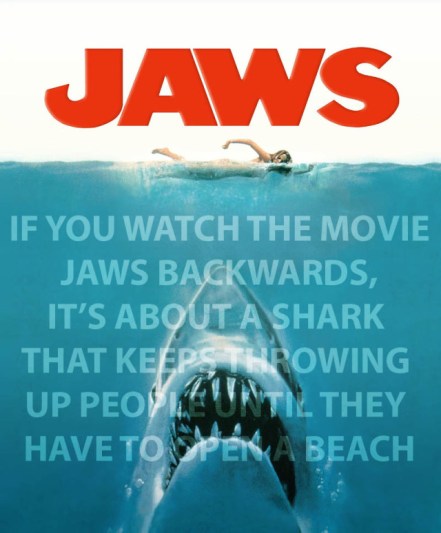
I’ve always been fascinated by stories told backwards, and I just discovered that there is an actual term for it: reverse chronology. #thingsIlearnedinquarantine
So…let’s fast forward to the end.
Your prompt:
Tell a story that begins at the end and works its way backwards.
I’ve been finding it interesting how, in this streaming, online version of our lives, celebrities seem less exalted, more normal, also wearing their sweatpants, also struggling, also hoping. Also reaching out. The dividing line between the stage and the audience seems to have been breached, and maybe that’s a good thing.
“For a seed to achieve its greatest expression, it must come completely undone. The shell cracks, its insides come out and everything changes. To someone who doesn’t understand growth, it would look like complete destruction.”
~Cynthia Occelli
I love this quote. And, in the midst of everything happening, we might be forgetting that it is spring! Even if we are still in a strange spring hibernation, our bodies and mother nature is turning on the spring switch. And growth–whether it’s the seed or our own internal growth–is usually messy.
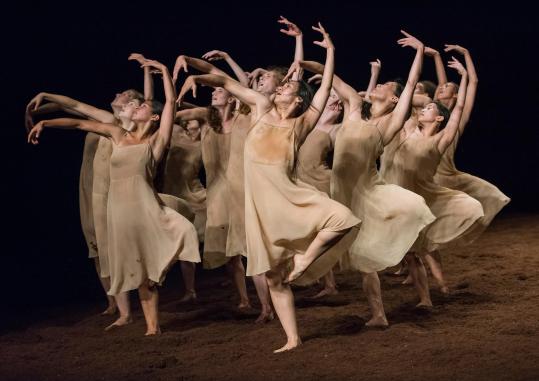
Another spring story I find fascinating is the one about classical composer Igor Fyodorovich Stravinksy, whose Rite of Spring ballet/orchestral piece, which takes us through the eruption of spring (and which you may recognize pieces of), prompted riots–actual riots!–when it premiered in Paris in 1913–and Stravinsky was actually run out of town! The audience was completely unprepared for the primal drums and the slicing of violins–even though that is what is happening right now under the ground…
Your prompt today is a musical prompt:
Listen to The Rite of Spring (about 35 mins–I mean, what else do you have to do today?? Ha.)
Then write.
PS: If you aren’t used to listening to classical music, I suggest not watching the video–just listen and allow the waves of sound to move your emotions in that mysterious and wordless way that only instrumental music can.
Today’s prompt is specifically for those of you feeling creatively stuck and needing to just crack the ice and get your fingers moving. And it makes for a great warm-up on a regular basis, too.
Your prompt:
Open a book by a favorite author to any page. Then retype that page, word for word.
This exercise is great for not just warming up or getting you in the chair and typing, but there is also a lovely intuitive understanding of language and style that happens on a cellular level when we’re entwined with someone else’s actual syntax. Like osmosis.
We are halfway through our month of prompts–thank you so much for letting us serve you this far–and today in our writing we are going to name the elephant in the room:
Often when we are developing a character, getting to “know” and understand a character, we do exercises like “put that character in a bar/grocery store and see what they buy” or “make a list of all the things in that character’s refrigerator.” Whether you like these exercises and use them or not, the impetus behind them is the same: our characters are different from us, and we have to get to know them, as we would a new friend.
Well, my friends, there is a new character in town and it’s time to talk to them.
Your prompt:
Allow Coronavirus to become a character. If Coronavirus were a character, what would they say and do? Talk to Coronavirus; ask them for their wisdom.
P.S. Your prompt today might be better done in a journal, at least at first. I wouldn’t limit yourself to 1,000 words, and I wouldn’t insist on writing a story, unless one naturally arises. You and Coronavirus might have a lot to say to each other.





 Open Your Art Writing Retreats