Blog

Interviews, Kathy fish

Weekend Inspiration: Tethered by Letters interviews Kathy Fish

How would you say your writing career began? Was there a certain event, person, or intuitive impulse that guided you to forge your own literary path? 

Like so many writers, I began writing as a child and then put it aside to work on what I thought were more serious and reasonable pursuits. Two things set me on the literary path: First was a writing workshop I signed up for when we were living in Australia and my fourth child was still just a baby. I needed something to keep me from going crazy and that workshop was just wonderful. It set me on fire, creatively. Then I joined an online site called Zoetrope, the creative brainchild of Francis Ford Coppola. It was loaded with writers and poets and screenwriters and photographers, etc. all under one “roof.” There I was able to share my work and get constructive feedback from writers further along than I was and I learned so much, so fast. It was then that I began pursuing writing seriously and sending my work out.

Years later, and you’ve published four collections of short fiction—­what can you tell us about the publication process? How would you evaluate your own experience with getting your work printed? 

My experience is a little unusual because I’ve never gone through the process of querying publishers and sending my work out. I’ve always been invited to submit. My first chapbook was published by Rose Metal Press and that was because it was a finalist in their contest and they wanted to create a book from the finalist chapbooks. So my experience has been pretty positive! If you go with a smaller press, you have much more creative control. The downside of a small press is that they really are doing it for the love, doing it in their free time, etc., and they often have to close down. But overall, yes, I’m happy with the books I’ve gotten out into the world.

That’s great to know because your stories are so good, so inventive—“Collective Nouns for Humans in the Wild,” “Stop Dragging: A One-Act Play,” “I Have Not Pushed Back My Cuticles with an Orange Stick Since the Nixon Administration”— how do you come up with your ideas? How do you find a story’s structure when limited by word count? 

Thank you! It’s the constraint of word count that opens flash fiction up to experimentation and innovation. Faced with so few words, you want to make the most impact that you can and sometimes playing with form helps you achieve maximum impact in the briefest of space. My ideas seem to come from simply scribbling in a notebook, dreaming on the page so to speak. Something just clicks. I “hear” the rhythm of a story before words really come to mind. For “Collective Nouns” I just kept hearing the refrain, “The word for (something) is (something).” I think I’d seen something the day before about collective nouns, so I just riffed off that idea. Then the shooting in Las Vegas happened and I was struck by the idea that these people had been so excited to go to that concert. They were gathered to have a fun night out and became targets. So my feelings about that and this refrain going through my head sort of coalesced into that piece. And so many of my stories seem to come together like that.

That process sounds so organic. What would you say are the most important elements of flash fiction? What are some of the common missteps that can happen in a flash fiction piece?

Flash fiction is its own unique form. People get derailed when they sit down to write a flash fiction that follows all the traditional rules. It can be done, but they often find themselves stymied. Something’s missing. They might as well go ahead and write a short story.

To me, flash fiction is a very fluid form, particularly suited to experimentation. I always tell my students there are really only three “essentials” to great flash fiction (and 2 out of 3 can work as well). They are: emotion, movement, and resonance. Movement is my stand-in for plot. Something must change in a meaningful way. Resonance, because you have so few words on the page, means the story must in some way “live” beyond the last word.

There are lots of delightful flash stories that are not particularly emotional. They are more quirky and clever. I love those! But I think greatness comes from tapping into some deep emotion at its core, something that makes the reader feel.

Let’s say you’ve finished editing a story and it’s ready to go. You’ve been published in so many journals. Is there something in particular that you look for when approaching different journals with your work? 

If you love what a journal publishes, it’s likely you are writing something that fits their aesthetic. I say, send to the journals whose stories you read over and over again. I also look at where my favorite writers have published and submit to those journals.

Also, it’s important to me that a journal treats its writers well. Do they promote their issues on social media? Does the journal have a pleasing visual aesthetic? Is care taken with the words? Do they nominate for awards? These are all important to me when I look to send out my work.

Is there a particular achievement or experience that has opened up the most opportunity for your writing?

It would have to be that early chapbook getting published by Rose Metal Press. That is when I started doing my first readings and when I first began to feel like a legit writer. It gave me some visibility in our small lit world and gave me the confidence to keep at it.

You’ve kept at it and now you teach at an MFA program, and you run your own Flash Fiction workshops. What can you tell us about your experiences as a creative writing professor? Do you find that students today are taking more risks with their stories? Can you share one or two of the best writing exercises you use to get students to write outside of the box? 

I love teaching. I never expected to, but I love it as much as I love writing. I think students today take more risks if they are allowed and encouraged to do so! I am clobbered by the new work I’m seeing.

My most effective writing exercises are those that are not prescriptive but aim more at getting the writer to find her own material. Not just to find it, but to honor it. Honor their experiences and their pains. Honor their memories and dreams and what makes them unique. Once they get to that point, all I need do is show them what they can do with it, and there’s so often an “ah-ha” moment when I give them that freedom. For example, I have an exercise that has the students weaving disparate types of writing into a mosaic. First, I hear, “this is really hard” and then, “I can’t believe I wrote that!” They find their way into material they previously hadn’t been able to access. It’s very cool to watch.

I love how you say you “show them what they can do with it.” To me, that’s a sign of a great teacher, just pointing the student in the right direction. What writers helped point you in the right direction? What/who are some of your greatest literary influences?

So many. A lot of the writers I worked with on Zoetrope early on. Notably, Kim Chinquee and Pia Earhardt. I love Joy Williams, that strange, fearless brain of hers. Amy Hempel, Raymond Carver, Edward P. Jones, William Maxwell, Kazuo Ishiguro, Marilynne Robinson, Annie Proulx. Lots and lots of writers working now, like Amelia Gray, Amber Sparks, Lydia Copeland Gwyn, and Lindsay Hunter. I love the poetry of Khadijah Queen and Kaveh Akbar. Lately, I’ve been reading Sam Shepard’s plays, for that rhythm, just to see what action, gesture, and dialogue can do on their own.

What guidance might you give to fledgling writers/artists?

Oh the usual: Work hard. Keep showing up. Be generous and kind. Connect. Be a good literary citizen. Don’t wait until you have a book to promote to make connections. If someday you want others to buy and read and help promote your books, get started doing that now for other writers. Seize every opportunity to learn and get better.

After having successfully accomplished so much, what are your goals? What direction do you see your writing taking now, in terms of both craft and publication?

I want to keep trying new things. I’m actually at work on another play. I’m trying to write poems. I think they’re pretty bad, but I believe on some level dabbling in other art forms, risk-taking, and creative play, are all good for your soul if not your “career.”

And of course I’d love to publish lots more stories and books.

Nancy Stohlman

A Flash-Fiction Roundtable: Short but Never Small, featuring Nancy Stohlman

roundtable

“Flash fiction arrived for me in 2007 as I was writing my third novel, agonizing over it like a relationship you really really want to work out, dammit! It was during my MFA at Naropa University—I took a flash fiction class with Barbara Henning, and after so many years of writing more—talk more about this, give more description here, more backstory here, explain this more—it was such a relief to write less. I feel like flash fiction saved me from writing all those novels. Because I never really wanted to say all that other stuff anyway. Six months later I co-founded Fast Forward Press…I read hundreds of submissions and I started to lean into flash with my body, listening for my own voice to emerge.” ~ Nancy Stohlman

Terrific discussion of all things flash fiction at The Millions, featuring Nancy along with Tara Masih, Grant Faulkner, and Lynn Mundell. Read the rest here: Flash Fiction Roundtable at The Millions

Interviews

Strange Beauty & Writing Rituals: A Conversation with K.C. Mead-Brewer

Katie Author Photo (3)Hi K.C.! Nancy and I are so excited that you will be joining us in Costa Rica in January for our retreat. What has been your writing workshop/retreat experience in the past? How do you find ways to honor your writing in your day to day life?
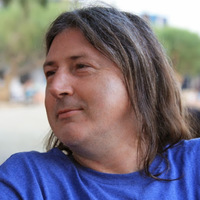
This is turning out to be a big workshop year for me. Before this year, I’ve participated in a couple Hedgebrook Master Classes and a residency through the Vermont Studio Center (not to mention regular meetings with my writing group!), but I’d never attended an actual workshop until the Tin House Winter Workshop this past January. And then, this summer, I’ll also be fortunate enough to participate in the Clarion Workshop. (!

Day-by-day, I engage in a lot of small rituals for my writing. (See question 5!) For example, I draw a tarot card for the day to help focus me, I light a candle, fix a cup of tea, eat a piece of chocolate, read something new, etc. I’m a worshipper of the goddess Ritual.

Please respond to this quote by Krystal Sutherland: “Strangeness is a necessary ingredient in beauty.”
Veins in a rose petal / veins in a bat’s wing. The rippling of a skirt / the rippling of a serpent. The moaning of a lover / the moaning of the wind. The suppleness of flesh / the suppleness of flesh. A memory / a ghost. A beauty mark / a mole. Laughter / screams. Relaxation / vulnerability. Musk / sweat. Catharsis / The End. 

All beauty is strange. It’s just that not all strangeness is beautiful.

Oh that’s gorgeous. I love that response. Thank you. What is your favorite story that you yourself have written (“favorite” doesn’t have to mean “best” or more successful or whatever). And why is it your favorite? 

Probably my short story “Chameleons”. It isn’t the best thing I’ve ever written (anymore), but at the time it felt incredibly freeing for me–like I’d finally figured out the kind of stories I wanted to write. The kind I was good at writing. It’s the story that showed me I might actually really a little bit sorta kinda maybe possibly be pretty good at this.

(Read K.C.’s story here: Chameleons)

Have you been to Costa Rica before? What are you most looking forward to as a writer retreating to this beautiful place? 

I’ve never been to Costa Rica before, but I’m very excited about visiting. I’m usually more of a cloudy person, preferring places that are dark and rainy and stark. Really, I’m looking forward to being somewhere so different from what I know and might’ve chosen for myself. And of course the animals! I’m hoping to see a new reptile every day.

Tell us something we don’t know about you that you are happy to share. : )

I don’t talk about this often, though you might’ve guessed it about me: I’m oddly superstitious. I believe in signs, symbols, talismans, omens, and ghosts. I’m a pretty shy and private person, so I don’t mention this much, but it’s always there.

That’s so fascinating. Thanks so much, K.C.! We are so looking forward to retreating with you this January in Costa Rica!

Note: A few spaces are still available for Create in Costa Rica. Join us!

K.C. Mead-Brewer lives in Baltimore, Maryland. Her fiction appears or is forthcoming in Strange Horizons, Carve Magazine, Hobart, and elsewhere. As an author and reader, she loves everything weird—SFF, horror, magical realism, all the good stuff that shows change is not only possible but inevitable. She’s participated in residencies, classes, and/or workshops through Tin House, Hedgebrook, and The Vermont Studio Center. She’s thrilled to be participating in this year’s Clarion Workshop. For more information, visit kcmeadbrewer.com and follow her on Twitter @meadwriter.

Interviews

Words are Magic: Pavlos Stavropoulos on Diving Deep into Language

s200_pavlos.stavropoulos

I’ve known Pavlos for 15+ years in many capacities: as an activist and street medic, as an eco-community organizer, and most recently as a writer blending these sensibilities together. Kathy and I are excited that Pavlos will be joining us this August in Breckenridge!

Nancy Stohlman: The biggest challenge most writers have is finding the time to write. How do you “retreat” in your day-to-day life in order to honor your creativity?

Pavlos Stavropoulos: I heard a poet friend of mine talk about how when she started giving herself the time to write first thing in the morning she “resented her day job a lot less.” The idea that we feel better when we start our day with time for ourselves isn’t something new but hearing her talk about it like this, plus some other experiences, pushed me to change my routine. I started walking to a local coffee shop first thing in the morning, having an espresso, and writing for an hour or more. I am not a morning person and I didn’t think it would last but I have gotten to the point in which I feel off when I don’t do it. There have been days that I woke up, realized I felt really tired, turned my alarm clock off to give myself that day “off” and found myself waking up again five minutes later compelled to get dressed and get out of the door. There is something about starting most mornings with a walk and writing time that makes the rest of the day feel more manageable. That schedule would not have been possible for me a year or more ago, and I still have a hard time adapting this routine to when I am on the road, but it is a start. I have also stopped berating myself if my writing time is not “productive.” My first step has been to just get in the habit of giving myself the time. Next step is to be more consistent with how I use that time.

Nancy: You are no stranger to the power of gathering with like-minded others. You founded the Woodbine Ecology Center here in Colorado, running programs and workshops that promote indigenous values and sustainable communities.  What is the most important thing you have learned in this endeavor?

Pavlos: I personally believe that we will not be able to create a just and free world till we, as a community, learn how to take responsibility for the essential functions which are now often performed or delivered by authoritarian and oppressive structures. Resisting these structures is often necessary, but becoming free also requires that we assume authority over our own lives, and that means learning new things and new ways of being. Starting Woodbine forced me to learn how to do things that I had always felt I “should” know but kept putting off for a variety of reasons. As long as I can turn on a switch and have light or can get clean water from a faucet I don’t “need” to learn how to generate electricity or treat water so that it can be potable, even if I really felt it was necessary that I acquire these skills. Making one big choice, to start Woodbine, made it both necessary and the more natural thing for me to learn how to do a whole bunch of other things.

We all operate within constraints in our daily lives, and often these constraints push us in a direction that we don’t want or like or is not good for us. Fighting against these constraints is over fruitless, and exhausting. We are creatures of comfort and convenience. Changing habits and patterns is a lot of hard work and when something feels like drudgery most of us naturally avoid it. Without even fully realizing it at the time, I had adopted a more evolutionary approach to change. Instead of forcing myself to make the hard and difficult choices simply because they are the “right” ones, change the environment around me so that the right choice is the easiest or more natural or more pleasurable to follow. This is not easy but it is a lot more successful than to keep fighting against myself. Changing the entire world around us is of course not possible for most of us. However we can choose to create, or at least find, even for a short time different environments and situations in which the “default” option is to do the things we most want to do, instead of having to fight ourselves in order to get things done. Being in a place that is away from our daily routine and, most importantly, being surrounded by people who have similar values, goals, and desires as we do can “force” us to take the exact same actions that we might be avoiding in our ordinary environment. The more we do that the easier it becomes to find ways to bring those patterns into the ordinary environments of our lives.

Nancy: What piece of your own writing are you most proud of?  Where can we read it?

Pavlos: I am pretty early in my writing journey so I have very little work “finished” let alone published, but I have been working on translating a book of flash fiction from Greek to English. This is the first book by the author, Ursula Foskolou. I found it during a trip back home—it had just won a prestigious award for new author—and I was struck by her voice and her lyricism, the economy of words, her ability to capture and convey complex emotions in a very small space. I was talking a literary translation course at the University of Denver at the time and I decided to translate some pieces from that book for the course. After the course was over I contacted the publisher and the author and asked, and was granted, permission to translate the whole book and try to get it published.

Translation requires me to dive deeply not only into the languages of the original and the one that I am translating to but into the essence of language itself. When the piece that I am working on is 100-150 words long then every single word counts and often plays multiple functions. When we think of translation we may think of words as dictionary definitions but they are a lot more than that. Words convey meaning but also subtext and emotion and they do it through context, sound, mood, disposition, placement, grammar, syntax, history, culture. Words are magic.

My translation of the book is in progress but I have submitted some of the individual pieces for publication in journals. One was published by Asymptote Journal in January and can be found at HERE  Two more were recently accepted by Exchanges, the literary translation journal of the Iowa Translation Workshop, and will be published in May. READ IT HERE

Nancy: React to this quote by Plato: “You can discover more about a person in an hour of play than in a year of conversation.”

Pavlos: All mammals learn how to survive and live in the world by playing. Play is literally written into our DNA. We forget sometimes, or actively try to ignore, that we are also animals but I believe that we let a critical part of ourselves, possibly the one connected most to our creativity and imagination, fade when we stop playing. We often consider our intellect to be our “higher” or most human aspect, but I think it is play more than anything else that allows us to be, and discover, who we really are.

Nancy: Tell us something we don’t know about you?

Pavlos: And give away the mystery? …

Nancy: Anything else you want to add?

Pavlos: Looking forward to meeting y’all and playing with magic together.

Pavlos Stavropoulos was born and raised in Athens Greece, with a Greek father and an American mother. Growing up in a bilingual household meant that translation became second nature. He now resides in Littleton, Colorado, USA where he works in social and environmental justice education, writes speculative fiction, and translates Greek literature into English. His translations have been published in Asymptote and are forthcoming in Exchanges.


Interviews, Kathy fish, Nancy Stohlman

On Returning to My First Love: “Words.” A Conversation with Traci Mullins

Photo - Traci Mullins

We’re so excited that Traci Mullins is going to be joining us in Costa Rica this coming January! Here Traci talks candidly about honoring the 8-year-old little girl inside of her that loved to play with words and how she is finally allowing HER to take the lead again.

Nancy Stohlman: The biggest challenge most writers have is finding the time to write. How do you “retreat” in your day-to-day life in order to honor your creativity?

Traci Mullins: ​I have a taxing day job, so this is definitely a challenge. ​In order to stay on task as a self-employed person, I have to set office hours and stick to them lest I give in to the temptation to goof off all day! Therefore, writing in the mornings, as many people do, doesn’t work for me. Evenings are usually family time, so I’ve been setting aside an hour or two at the end of my workday to change environments (usually to a coffee shop) and give dedicated attention to my writing. I have to admit I don’t always  write, but I at least do something related to writing, whether it’s taking an on-line class, reading others’ writing, or brainstorming story ideas. At this point, only a few months into writing my own stories, I’m trying not to be too black and white by telling myself that only the time I’m producing is “real” writing time. For me, anything I can do to fuel my creativity counts and will hopefully pay off over the long haul.
Nancy: Tell us about your relationship with flash fiction?
Traci: ​I stumbled upon this genre in January, quite by accident, when I was poking around on the internet, looking for fiction writing resources. I help other people write books for a living, so unfortunately I abandoned my own creative writing efforts decades ago. Over Christmas I had a slow period at work and decided that it was time to reengage the young girl in me who loved to write little stories. When I read about Flash, it seemed like a perfect place to start because it didn’t intimidate me like writing something longer did. I’ve since discovered that it’s more challenging than I anticipated, but I love it! I like taking one moment or event and unpacking it with just the right amount of detail, and I especially like being able to finish a story fairly quickly. Certainly not every story I write is good, but once in a while I come up with something that makes me happy, the way writing stories did when I was a child.
 
Nancy: What is the best piece of writing advice you ever received?
Traci: I’d like to say that I follow the advice I hear most often: “Write something every day.” But I actually value most what I read in your interview with Gay Degani (thank you, Gay!): “You are what you believe in, where you’ve been, what you’ve seen, what’s hurt you, what’s made you stronger.” I have tried using other people’s writing prompts, but the stories I’m most pleased with are those that feel authentically mine. So I try to dig into my own life and trust that there are story seeds to be found. Coming up with story ideas is by far my greatest challenge as a writer, so I have to practice patience and hone my skill at listening to my own life and heart.
 
Nancy: What piece of your own writing are you most proud of? Where can we read it (if it’s available)?
Traci: ​Since I only started writing a few months ago, I don’t have a lot to show for myself–haha! But the first two stories I submitted did get accepted​, at Flash Fiction Magazine. The first, called “Saved,” was posted on line on 3/10/18. READ IT HERE
The one that means the most to me, however, is “Animal Pancakes,” and they haven’t given me the publication date for that one yet.
Nancy: React to this quote: “Play is our brain’s favorite way of learning.”–Diane Ackerman
 
​​Traci: You couldn’t have given me a better quote to ponder because the ONLY reason I started writing again was to honor the 8-year-old in me who used to write prolifically, as pure play. I still have all the stories I wrote back then. It saddens me that I abandoned that girl, for many different reasons, so as I begin to pick up the pen again, it’s critical that I honor her and allow her to lead the way. As a professional non-fiction writer, it’s hard not to take everything I write seriously; but I am committed to creating space for the young creative in me to experiment and goof off with words, which have always been my favorite playthings. As I’ve been doing this over the past few months, I have indeed learned a lot about the craft, but that is a secondary benefit.
Nancy: Tell us something we don’t know about you?
Traci: I have helped hundreds of authors write books, doing a lot of writing as well as being published myself in the process, but writing fiction requires a completely new type of risk. Going from expert to novice is scary, but with the support of other writers I hope to create a safe space for my own creativity to be nurtured.
A random fact: at age 45, I went to nursing school and practiced as an oncology and hospice nurse until recently, when I returned to my first love: words.
 
Traci Mullins has more than three decades of experience in coaching, editing, book doctoring, and collaborating on hundreds of non-fiction books, helping authors and speakers to formulate and convey messages close to their hearts in an accessible and compelling style. She has helped launch the careers of many first-time writers as well as developed long-term coaching relationships with veterans of the trade. She specializes in developing titles on topics of spirituality, psychology, relationships, health & wellness, and memoir and considers it a privilege to shepherd authors through the concept-shaping and writing process.  For more detailed information on her projects, see her profile on LinkedIn.