Interviews

Words are Magic: Pavlos Stavropoulos on Diving Deep into Language

s200_pavlos.stavropoulos

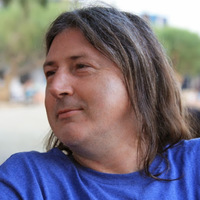
I’ve known Pavlos for 15+ years in many capacities: as an activist and street medic, as an eco-community organizer, and most recently as a writer blending these sensibilities together. Kathy and I are excited that Pavlos will be joining us this August in Breckenridge!

Nancy Stohlman: The biggest challenge most writers have is finding the time to write. How do you “retreat” in your day-to-day life in order to honor your creativity?

Pavlos Stavropoulos: I heard a poet friend of mine talk about how when she started giving herself the time to write first thing in the morning she “resented her day job a lot less.” The idea that we feel better when we start our day with time for ourselves isn’t something new but hearing her talk about it like this, plus some other experiences, pushed me to change my routine. I started walking to a local coffee shop first thing in the morning, having an espresso, and writing for an hour or more. I am not a morning person and I didn’t think it would last but I have gotten to the point in which I feel off when I don’t do it. There have been days that I woke up, realized I felt really tired, turned my alarm clock off to give myself that day “off” and found myself waking up again five minutes later compelled to get dressed and get out of the door. There is something about starting most mornings with a walk and writing time that makes the rest of the day feel more manageable. That schedule would not have been possible for me a year or more ago, and I still have a hard time adapting this routine to when I am on the road, but it is a start. I have also stopped berating myself if my writing time is not “productive.” My first step has been to just get in the habit of giving myself the time. Next step is to be more consistent with how I use that time.

Nancy: You are no stranger to the power of gathering with like-minded others. You founded the Woodbine Ecology Center here in Colorado, running programs and workshops that promote indigenous values and sustainable communities.  What is the most important thing you have learned in this endeavor?

Pavlos: I personally believe that we will not be able to create a just and free world till we, as a community, learn how to take responsibility for the essential functions which are now often performed or delivered by authoritarian and oppressive structures. Resisting these structures is often necessary, but becoming free also requires that we assume authority over our own lives, and that means learning new things and new ways of being. Starting Woodbine forced me to learn how to do things that I had always felt I “should” know but kept putting off for a variety of reasons. As long as I can turn on a switch and have light or can get clean water from a faucet I don’t “need” to learn how to generate electricity or treat water so that it can be potable, even if I really felt it was necessary that I acquire these skills. Making one big choice, to start Woodbine, made it both necessary and the more natural thing for me to learn how to do a whole bunch of other things.

We all operate within constraints in our daily lives, and often these constraints push us in a direction that we don’t want or like or is not good for us. Fighting against these constraints is over fruitless, and exhausting. We are creatures of comfort and convenience. Changing habits and patterns is a lot of hard work and when something feels like drudgery most of us naturally avoid it. Without even fully realizing it at the time, I had adopted a more evolutionary approach to change. Instead of forcing myself to make the hard and difficult choices simply because they are the “right” ones, change the environment around me so that the right choice is the easiest or more natural or more pleasurable to follow. This is not easy but it is a lot more successful than to keep fighting against myself. Changing the entire world around us is of course not possible for most of us. However we can choose to create, or at least find, even for a short time different environments and situations in which the “default” option is to do the things we most want to do, instead of having to fight ourselves in order to get things done. Being in a place that is away from our daily routine and, most importantly, being surrounded by people who have similar values, goals, and desires as we do can “force” us to take the exact same actions that we might be avoiding in our ordinary environment. The more we do that the easier it becomes to find ways to bring those patterns into the ordinary environments of our lives.

Nancy: What piece of your own writing are you most proud of?  Where can we read it?

Pavlos: I am pretty early in my writing journey so I have very little work “finished” let alone published, but I have been working on translating a book of flash fiction from Greek to English. This is the first book by the author, Ursula Foskolou. I found it during a trip back home—it had just won a prestigious award for new author—and I was struck by her voice and her lyricism, the economy of words, her ability to capture and convey complex emotions in a very small space. I was talking a literary translation course at the University of Denver at the time and I decided to translate some pieces from that book for the course. After the course was over I contacted the publisher and the author and asked, and was granted, permission to translate the whole book and try to get it published.

Translation requires me to dive deeply not only into the languages of the original and the one that I am translating to but into the essence of language itself. When the piece that I am working on is 100-150 words long then every single word counts and often plays multiple functions. When we think of translation we may think of words as dictionary definitions but they are a lot more than that. Words convey meaning but also subtext and emotion and they do it through context, sound, mood, disposition, placement, grammar, syntax, history, culture. Words are magic.

My translation of the book is in progress but I have submitted some of the individual pieces for publication in journals. One was published by Asymptote Journal in January and can be found at HERE  Two more were recently accepted by Exchanges, the literary translation journal of the Iowa Translation Workshop, and will be published in May. READ IT HERE

Nancy: React to this quote by Plato: “You can discover more about a person in an hour of play than in a year of conversation.”

Pavlos: All mammals learn how to survive and live in the world by playing. Play is literally written into our DNA. We forget sometimes, or actively try to ignore, that we are also animals but I believe that we let a critical part of ourselves, possibly the one connected most to our creativity and imagination, fade when we stop playing. We often consider our intellect to be our “higher” or most human aspect, but I think it is play more than anything else that allows us to be, and discover, who we really are.

Nancy: Tell us something we don’t know about you?

Pavlos: And give away the mystery? …

Nancy: Anything else you want to add?

Pavlos: Looking forward to meeting y’all and playing with magic together.

Pavlos Stavropoulos was born and raised in Athens Greece, with a Greek father and an American mother. Growing up in a bilingual household meant that translation became second nature. He now resides in Littleton, Colorado, USA where he works in social and environmental justice education, writes speculative fiction, and translates Greek literature into English. His translations have been published in Asymptote and are forthcoming in Exchanges.


Interviews, Kathy fish, Nancy Stohlman

On Returning to My First Love: “Words.” A Conversation with Traci Mullins

Photo - Traci Mullins

We’re so excited that Traci Mullins is going to be joining us in Costa Rica this coming January! Here Traci talks candidly about honoring the 8-year-old little girl inside of her that loved to play with words and how she is finally allowing HER to take the lead again.

Nancy Stohlman: The biggest challenge most writers have is finding the time to write. How do you “retreat” in your day-to-day life in order to honor your creativity?

Traci Mullins: ​I have a taxing day job, so this is definitely a challenge. ​In order to stay on task as a self-employed person, I have to set office hours and stick to them lest I give in to the temptation to goof off all day! Therefore, writing in the mornings, as many people do, doesn’t work for me. Evenings are usually family time, so I’ve been setting aside an hour or two at the end of my workday to change environments (usually to a coffee shop) and give dedicated attention to my writing. I have to admit I don’t always  write, but I at least do something related to writing, whether it’s taking an on-line class, reading others’ writing, or brainstorming story ideas. At this point, only a few months into writing my own stories, I’m trying not to be too black and white by telling myself that only the time I’m producing is “real” writing time. For me, anything I can do to fuel my creativity counts and will hopefully pay off over the long haul.
Nancy: Tell us about your relationship with flash fiction?
Traci: ​I stumbled upon this genre in January, quite by accident, when I was poking around on the internet, looking for fiction writing resources. I help other people write books for a living, so unfortunately I abandoned my own creative writing efforts decades ago. Over Christmas I had a slow period at work and decided that it was time to reengage the young girl in me who loved to write little stories. When I read about Flash, it seemed like a perfect place to start because it didn’t intimidate me like writing something longer did. I’ve since discovered that it’s more challenging than I anticipated, but I love it! I like taking one moment or event and unpacking it with just the right amount of detail, and I especially like being able to finish a story fairly quickly. Certainly not every story I write is good, but once in a while I come up with something that makes me happy, the way writing stories did when I was a child.
 
Nancy: What is the best piece of writing advice you ever received?
Traci: I’d like to say that I follow the advice I hear most often: “Write something every day.” But I actually value most what I read in your interview with Gay Degani (thank you, Gay!): “You are what you believe in, where you’ve been, what you’ve seen, what’s hurt you, what’s made you stronger.” I have tried using other people’s writing prompts, but the stories I’m most pleased with are those that feel authentically mine. So I try to dig into my own life and trust that there are story seeds to be found. Coming up with story ideas is by far my greatest challenge as a writer, so I have to practice patience and hone my skill at listening to my own life and heart.
 
Nancy: What piece of your own writing are you most proud of? Where can we read it (if it’s available)?
Traci: ​Since I only started writing a few months ago, I don’t have a lot to show for myself–haha! But the first two stories I submitted did get accepted​, at Flash Fiction Magazine. The first, called “Saved,” was posted on line on 3/10/18. READ IT HERE
The one that means the most to me, however, is “Animal Pancakes,” and they haven’t given me the publication date for that one yet.
Nancy: React to this quote: “Play is our brain’s favorite way of learning.”–Diane Ackerman
 
​​Traci: You couldn’t have given me a better quote to ponder because the ONLY reason I started writing again was to honor the 8-year-old in me who used to write prolifically, as pure play. I still have all the stories I wrote back then. It saddens me that I abandoned that girl, for many different reasons, so as I begin to pick up the pen again, it’s critical that I honor her and allow her to lead the way. As a professional non-fiction writer, it’s hard not to take everything I write seriously; but I am committed to creating space for the young creative in me to experiment and goof off with words, which have always been my favorite playthings. As I’ve been doing this over the past few months, I have indeed learned a lot about the craft, but that is a secondary benefit.
Nancy: Tell us something we don’t know about you?
Traci: I have helped hundreds of authors write books, doing a lot of writing as well as being published myself in the process, but writing fiction requires a completely new type of risk. Going from expert to novice is scary, but with the support of other writers I hope to create a safe space for my own creativity to be nurtured.
A random fact: at age 45, I went to nursing school and practiced as an oncology and hospice nurse until recently, when I returned to my first love: words.
 
Traci Mullins has more than three decades of experience in coaching, editing, book doctoring, and collaborating on hundreds of non-fiction books, helping authors and speakers to formulate and convey messages close to their hearts in an accessible and compelling style. She has helped launch the careers of many first-time writers as well as developed long-term coaching relationships with veterans of the trade. She specializes in developing titles on topics of spirituality, psychology, relationships, health & wellness, and memoir and considers it a privilege to shepherd authors through the concept-shaping and writing process.  For more detailed information on her projects, see her profile on LinkedIn.
Interviews, Kathy fish, Nancy Stohlman, Uncategorized

“Free and Rebellious”–Jan Saenz on the Art of Flash Fiction and Collecting Weird Objects

Kathy Fish and I are thrilled that Jan Saenz will be traveling to Colorado this August to retreat with us! I chatted with Jan about writing, flash fiction, and collecting weird objects:

fullsizeoutput_1ee7

Nancy Stohlman: The biggest challenge most writers have is finding the time to write. How do you “retreat” in your day-to-day life in order to honor your creativity?

Jan Saenz: It used to be so easy. I’d put the kids to bed, kiss the husband goodnight, sit on the couch and write like mad. The night would disappear and before I knew it, the sun was up and I was driving the kids to school in a stale, zombie state of mind. Those were the days.

I don’t know if it’s age or pressure or what, but nowadays retreating involves so much more premeditation. Literally. I have to sit and stew before I write. Coffee is a much. Quiet helps. I see writers in coffee shops on their laptops and I’m like, How are they doing that? And how do they manage to look cool while doing it? I look like a psychopath when I write. I talk to myself. I suppose that’s my most common retreat, mentally playing out scenes throughout the day. Listening to the flow of dialogue, saying it aloud. It’s looney.
Nancy: Tell us about your relationship with flash fiction?

Jan: I was a crap student in school. Slow reader. Bad speller. Creative writing was something I could do, but was never encouraged to do. I don’t remember teachers or professors ever saying, “Be brave! Forget the rules, ignore standards—write like you are in a dream.” Maybe that’s why I like flash. It feels free and rebellious. And the limited word count has a way of making the story feel almost dream-like. There’s a real art to it. I like working in the attitude of flash. Do what you want, but be picky about it. Say it all, but be brief. I love Puberty by Kat Gonso. V-Card by Meghan Phillips. The Hollow by Kathy Fish. That’s just a few.


Nancy: What is the best piece of writing advice you ever received?

Jan: “Write the book you want to read.” It’s a common quote, but for good reason. I went through a (miserable) phase about two years ago. For some reason, I could not write anything without first considering what a reader would want. I would change certain details in my stories so they would be more “acceptable” to a wider audience. I cut curse words. Toned down sex scenes. Worried about female likability. That shit did nothing but kill my writing. Nowadays, I try to focus more on editing the execution, not the personal taste. Because the taste is mine. Haha.


Nancy: What piece of your own writing are you most proud of? Where can we read it (if it’s available)?

Jan: Paper Darts recently published one of my pieces. It’s the weirdest, coolest feeling when editors you greatly admire come back and say, “Hey, I really liked this.” Like, wait what? You get so used to rejection, acceptance starts to feel foreign. You can read it here:


Nancy: React to this quote by Frank Capra: “A hunch is creativity trying to tell you something.”

Jan: I think most artists have a certain intuition when it comes to their craft. When inspiration pops up, they automatically recognize it. They study it. Obsess over it. And if they’re lucky, they’re able to follow through with it. Make it into something special. But there’s got to be a back-up plan, you know? I can’t sit around waiting for “hunches” or creative intuition to set in. I’ve got to live my life and experience things outside of writing. Otherwise my work suffers. It doesn’t evolve.


Nancy: Tell us something we don’t know about you?

Jan: I collect things. It’s weirdly therapeutic. Chess boards. Religious items. Afghan blankets. Old photographs of horses. Teeth. The list goes on, and yes it gets weirder. My best friend and I are really passionate about aesthetics in homemaking…that sounds so pretentious, but I swear we’re just giggly moms who geek-out at Goodwill. We have an IG account called Hoardhouse Vintage. If you like eclectic home decorating, check it out:


Jan Saenz is a writer and serial thrift shopper. She has work in Paper Darts, Bending Genres, and is currently working on her third novel, a dark comedy about amateur drug dealers and the female orgasm. She has a doctorate in useless pop-culture facts. For more information, visit www.jansaenz.com or follow @jan_saenz

Interviews

Max Hipp on Writing, Retreating, and “Getting Messy”

Hi Max! You will be joining Nancy & me for Create in Costa Rica in January. Thanks! We’re so excited for this retreat. What, if any, has been your writing workshop/retreat experience in the past? How do you find ways to honor your writing in your day-to-day life?

I did a Barrelhouse Writer Camp last summer in rural PA (Barrelhouse does great work for writing culture—not only do they publish a journal and many books, they also offer a grant for up-and-coming lit journals!). A creek ran through the property and we’d all get together, a few dozen writers and editors, to eat dinner and watch a terrible movie. I was able to get a lot done.

I make time for writing every day, at least a couple of hours. If I can’t do that, if I don’t have time to even sit down, I’ll write things on my phone. Even if it’s just a paragraph or an idea.

Respond to this quote by Brenda Ueland: “So you see, imagination needs moodling – long, inefficient, happy idling, dawdling and puttering.”

This is from one of the four million books on writing I’ve read that I wish I owned. Of course I agree. Personally I’m trying to spend less time “dawdling and puttering” so more of it has an end result.

What is your favorite story that you yourself have written (“favorite” doesn’t have to mean “best” or more successful or whatever). And why is it your favorite?

The truth is my favorite piece is whatever I’m working on. I’ve got a few new things bouncing around, though, that I think are pretty good. Even though nobody has taken them yet, the rejections from journals have been complimentary and specific rather than boilerplate, so that’s somewhat encouraging.

Tell us something we don’t know about you that you are happy to share. AND/OR What are you most looking forward to in the upcoming retreat in Costa Rica?

I write songs, short stories, flashes, and aborted novels. I used to compartmentalize the forms because I was thinking they should all be made so differently. Now I get messy and let them leak all over each other.

I’m looking forward to a community of writers in a new place. It helps so much to read works in progress with other writers and editors–people who are great readers–and just talk about what you’re making.

I love what you say about allowing different forms to “leak all over each other.” And I agree wholeheartedly about the value of community for writers! Max, thanks for taking the time to chat. Nancy and I look forward to creating in Costa Rica with you!

NOTE: A few spots remain for Create in Costa Rica in January! Join us!

Bio: Max Hipp is a teacher and writer living in Mississippi. His work has appeared in Black Warrior Review, New World Writing, Unbroken Journal, and Five 2 One. Follow him on Twitter: @maximumevil

Interviews

“Writing has been my window.” A conversation with April Bradley

Nancy and I are so excited that the wonderful April Bradley will be joining us for Rendezvous in the Rockies this August in Breckenridge, Colorado! Here, April chats with me about her writing life and her story, “Little Wake,” which is my personal favorite.

You’re coming to Breckenridge in the summer for our retreat. What has been your writing workshop/retreat experience in the past? How do you find ways to honor your writing in your day to day life?

Along with several workshops with Kathy Fish and thematic ones on the craft of flash and revision offered by Nancy Stohlman, I’ve taken two hybrid writing workshops, one each with Robert Vaughan over at Word Tango and Jonathan Cardew with Bending Genres. I took a workshop on Surreal Flash from Meg Pokrass as well.

I met Kathy while taking Hannah Tinti’s fantastic workshop over at One Story. Last summer I began my MFA program and had my first academic fiction workshop at the Sewanee School of Letters with Jamie Quatro.

I read like a lunatic regardless if I am actively writing. I love the idea of honoring one’s writing. That’s so much better than feeling guilty about not writing.

Respond to this quote by Dani Shapiro:

“Writing saved my life. Writing has been my window — flung wide open to this magnificent, chaotic existence — my way of interpreting everything within my grasp. Writing has extended that grasp by pushing me beyond comfort, beyond safety, past my self-perceived limits. It has softened my heart and hardened my intellect. It has been a privilege. It has whipped my ass. It has burned into me a valuable clarity. It has made me think about suffering, randomness, good will, luck, memory responsibility, and kindness, on a daily basis — whether I feel like it or not. It has insisted that I grow up. That I evolve. It has pushed me to get better, to be better. It is my disease and my cure. It has allowed me not only to withstand the losses in my life but to alter those losses — to chip away at my own bewilderment until I find the pattern in it.”

This is such a wonderful expression of what writing can do for the life and mind of writer, and some of it articulates my own experience. I did not start writing fiction until I was in my 40s and found different ways of attaining and experiencing what she describes, mostly through my own graduate work in philosophy and theology and though my experiences in motherhood. Creative writing, however, pushed me in ways I’ve never imagined. I’ve cried, walked away from a story, swearing I was done with it, only to sit down and work with it more. Writing has been that only thing as Shapiro writes, “…has allowed me not only to withstand the losses in my life but to alter those losses…” Writing has revealed things to me about human nature I didn’t expect. It has revealed things about my own life and past I did not recall. Writing is closely related to reading and to other writers. Writing and reading opens up new worlds for me, allows me to me to express more fully the different aspects of myself but when it reaches others, and when readers tell me something I’ve written takes on meaning for them, there is the gift.

What is your favorite story that you yourself have written (“favorite” doesn’t have to mean “best” or more successful or whatever). And why is it your favorite?

My favorite is “Little Wake.” CHEAP POP published it last year, and I was thrilled. I managed to convey a moment in time and expand it to something so much more and capture the emotion I felt in that moment, that sense of magic, bittersweet loss, love, even a childhood fascination and an adult crush. I can still hear the frogs croaking along to Ob-La-Di, Ob-La-Da when I think about that story. Got lucky on that one.

Tell us something we don’t know about you that you are happy to share. : )

I meet people I know in unexpected, surprising places like in Venice or New York, in airports, concerts, interviews, courtrooms, emergency rooms. Neat things like that happen to me, and I love it.

Love that! And thanks so much, April. See you in Breckenridge in August!

April Bradley is from Tennessee and lives with her family outside New Haven, Connecticut. Her short fiction has been recently nominated for The Pushcart Prize as well as The Best of Small Fictions. Her writing has appeared in CHEAP POP, Hermeneutic Chaos Literary Journal, The Journal of Compressed Creative Arts, Narratively, NANO Fiction, and Smokelong Quarterly’s “Why Flash Fiction” Series, among others. She has a Master’s in Ethics from Yale Divinity School and is an MFA candidate at the Sewanee School of Letters.