Last night I was rereading When Things Fall Apart by Pema Chodron, and I wanted to share this parable about a man dealing with fear:
“He said he was determined to get rid of his negative emotions. He struggled against anger and lust; he struggled against laziness and pride. But mostly he wanted to get rid of his fear. His meditation teacher kept telling him to stop struggling, but he took that as just another way of explaining how to overcome his obstacles.
Finally the teacher sent him off to meditate in a tiny hut in the foothills. He shut the door and settled down to practice, and when it got dark he lit three small candles. Around midnight he heard a noise in the corner of the room, and in the darkness he saw a very large snake. It looked to him like a king cobra. It was right in front of him, swaying. All night he stayed totally alert, keeping his eyes on the snake. He was so afraid that he couldn’t move. There was just the snake and himself and fear.
Just before down the last candle went out, and he began to cry. He cried not in despair but from tenderness. He felt the longing of all the animals and people in the world; he knew their alienation and their struggle. All his meditation had been nothing but further separation and struggle. He accepted–really accepted wholeheartedly–that he was angry and jealous, that he resisted and struggled, and that he was afraid. He accepted that he was also precious beyond measure–wise and foolish, rich and poor, and totally unfathomable. He felt so much gratitude that in the total darkness he stood up, walked towards the snake, and bowed. Then he fell sound asleep on the floor.
When he awoke, the snake was gone. He never knew if it was his imagination or if it had really been there, and it didn’t seem to matter. That much intimacy with fear caused his dramas to collapse and the world around him finally got through.”
The power of parable, and the reason they have such a lasting effect, is because parables use the power of narrative to show rather than tell. And since human beings are by nature storytellers, the lessons are more usually understood, absorbed, and assimilated.
Most religious texts use parables, but other books I love that use parables and allegory are The Tao of Pooh and The Alchemist, if you are looking for some quarantine reading.
Your prompt:
Write a parable.
(These three steps are adapted from here)
- Start with the moral lesson. Think about a moral principle that has been important in your own life, or one that you’re still struggling to learn fully. You might also choose something that you’re curious about and want to explore.
- Consider its consequences. What might happen as a result of behaving (or not behaving) according to your moral lesson? In “The Boy Who Cried Wolf,” the consequence of dishonesty is that liars will not be believed in important moments, and it’s hard to live without people’s trust.
- Write a story following a basic beginning-middle-end structure. The beginning sets the stage and tells us who all the main characters are, while establishing important themes; in the middle, some kind of problem, conflict, or danger emerges; and in the end, we learn about the results of that conflict.
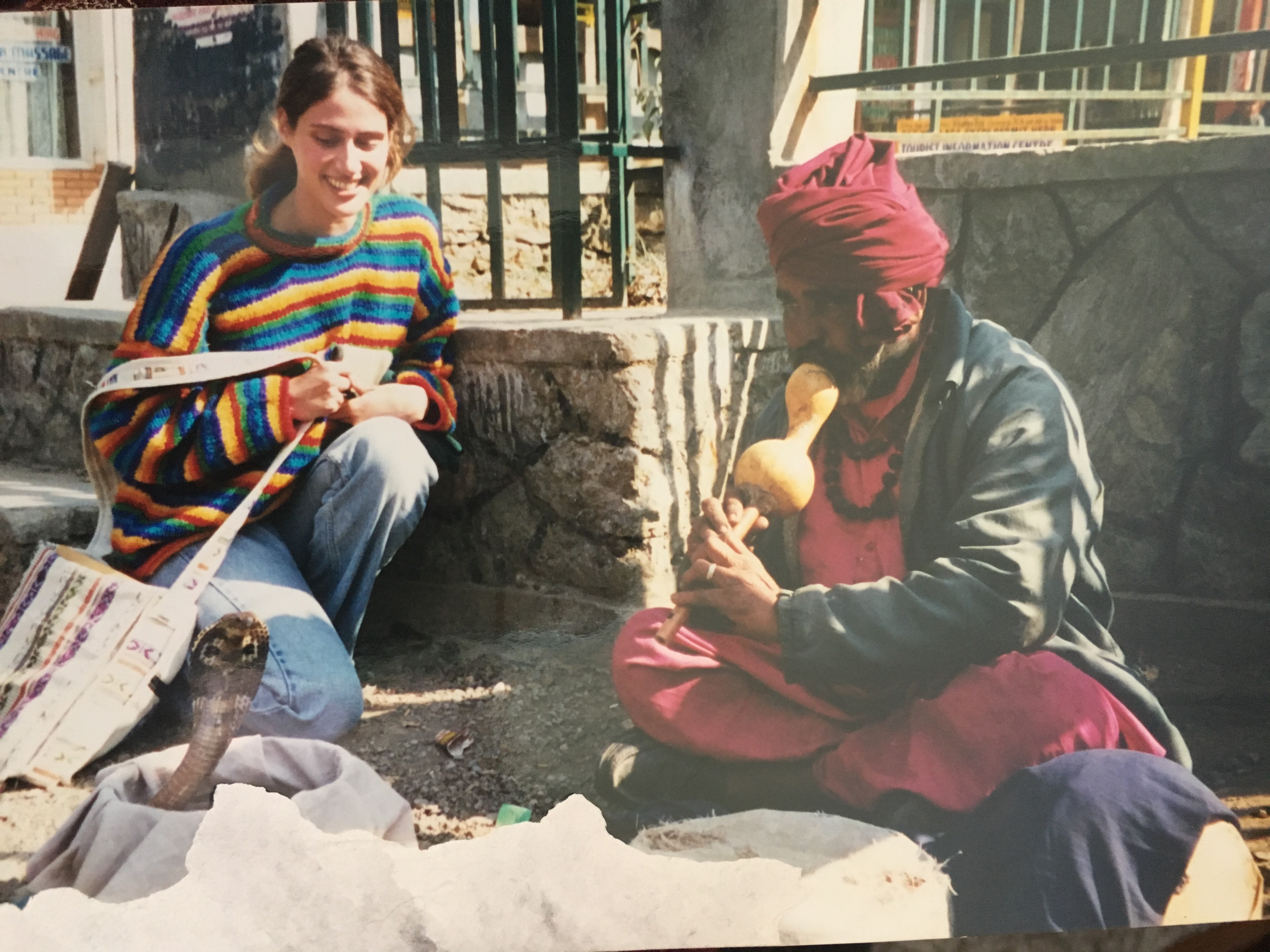
(And for fun: here’s a picture of me with a cobra in Nepal when I was about 27. Unlike the lesson of the man in the parable, my face is saying: take the picture quick!)
Happy Writing! In solidarity!
xoN





 Open Your Art Writing Retreats