‘But I don’t want to go among mad people,’ said Alice. ‘Oh, you can’t help that,’ said the cat. ‘We’re all mad here.’ ~ Lewis Carroll
I’m sure the world is feeling pretty mad to you right now. One of the reasons I love absurdity in art is because I believe when we stop looking for TRUTH with the capital T, when we embrace the madness, we’re able to see the more subtle, more real, and usually more potent truths bleeding through the surface of “silly” or “weird.”
SO…let’s enter the madness and embrace the weird.
Write a real story, something that happened to you or someone you know that was so ___________(insert adjective here) that no one would believe it’s true.
BUT, when you write it, do not stay bound to TRUTH with a capital T. Instead, invite the story to get even weirder, allow exaggeration and hyperbole to take it in strange directions, and see if something even more interesting starts peeking through.
How are you feeling today? Maybe you feel like I do: Anxious, fraught with unease and uncertainty. It’s a feeling we normally seek to escape, right? Today I’m asking you to lean into your uncertainty and use it in your writing.
“Have patience with everything that remains unsolved in your heart…live in the question.” ~Rainer Maria Rilke – Letters to a Young Poet
Your prompt then is this:
Maybe have a bit of fun with the rarely used omniscient POV. Adopt an odd all-seeing voice perhaps. Then give us a character who is mired in uncertainty. Shit’s about to go down, either dramatically or more subtly. The uncertainty will be deeply uncomfortable for your character, but deliciously compelling for your reader. Your first line should go something like this:
“[Character name] doesn’t know [about the thing that’s about to happen to the world or to herself]…”
Take it from there. Go where the writing takes you. Set off without a map or compass or plan. Lean into uncertainty in today’s practice..
Choreographer Twyla Tharp in her book, The Creative Habit, encourages creatives to keep a journal of the things we see (hear, taste, smell, etc.), especially when they are juxtaposed in interesting ways that draw our attention, be they intentional or accidental.
It’s tremendously useful to keep a journal of the things that particularly draw your attention in your daily life. Maybe the idea of writing lots and lots of pages of your inner workings every day doesn’t appeal. But you can jot things down. And when you’re stuck, go back and look at them again. I have these odd notes on my phone: snippets of overheard conversation, a phrase from a song, peculiarities of the natural world (or of my neighbors down the street). Lots and lots of photos. Collect images and ideas you’re attracted to. Put them in your phone or folder or spiral notebook, whatever. Just don’t rely on memory!
Doing this, coupled with some daily “down time” (even if only for 15 minutes) will work magic on your creativity.
It’s about openness and receptivity to, well, a sort of creative alchemy.
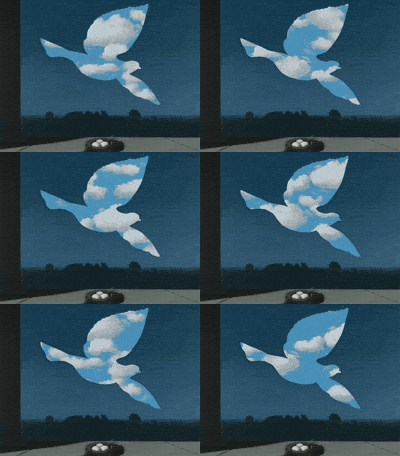
Via: Giphy Flying Rene Magritte GIF by Feliks Tomasz Konczakowski
Juxtaposition is defined as: “the act or an instance of placing two or more things side by side often to compare or contrast or to create an interesting effect.” (Merriam-Webster)
Poets are great at juxtaposition. Haiku writers and mosaicists specialize in it. They jam two or more very different ideas or images together to create new meaning and associations. It’s why we so often get an “ah ha!” experience from reading poetry. Filmmakers and photographers and visual artists of all stripes also make powerful use of juxtaposition.
But flash writers can (and should) make this a part of their toolbox as well.
In Joy Williams’ collection Ninety-Nine Stories of God, (a book I highly recommend), there’s a flash called “Veracity” that manages, in a scant couple of hundred words, a brilliant juxtaposition of church pews, a birthday bounce house, a dog, and a ’64 Airstream Globetrotter. And every single one of these elements feels necessary and significant.
My flash, “Foundling” (below) uses a similar jamming together of elements in a very short space:
Foundling
They discovered the baby in the grass, under the snapping cotton sheets. The clothesline spun and creaked, throwing light, then shadow, on his face, his wee head smooth and curved as a doorknob. The woman didn’t bend, only drew her hair from her eyes. He smells like Malt-o-Meal, the little girl said, hoisting him. Support his neck, the woman told her. It’ll snap like a pencil. Christmas Eve, her husband had packed and left for Cincinnati. Now, as raindrops dotted their arms, and the woman’s skirt flicked her calves, he came rushing through the gate, holding a newspaper over his head, calling Margaret! Margaret!
The exercise below will have you bumping together disparate objects / images / ideas in micro form to see where it takes you, what surprises you, what you unearth. You may discover new meaning is created when juxtaposing two disparate objects, ideas, or images. Forcing yourself to do this in a very small space actually serves to ramp up the power of juxtaposition. Very little room is left to “explain” yourself. You must allow what your unconscious delivers to you. The results are often delightful or disturbing, but always surprising.
Microfiction is variously defined by different word limits. For our purposes, let’s say 150 words or fewer. Microfiction often resembles prose poetry. The line between flash and prose poetry is wafer thin at times. But please set aside any need to categorize your work at this juncture. Allow whatever emerges.
So! Your prompt:
I want you to combine two or more disparate elements as compactly as you can, bump them up against each other, in as tiny a story as possible.
Don’t worry in this first draft about “making sense”…your unconscious has a tendency to make its own kind of beauty and sense. It’s what we are wired to do, after all. Find the patterns. And if we can’t find them, we create them.
Choose ONE from List A and ONE from List B and get to work!
Try to keep to just 150 words or fewer if you can.
List A
tangerine
ghost
disco ball
Isaac Newton
surgeon
List B
Saturn
Marilyn Monroe
fortune teller
continental drift
funnel cloud
This prompt will be easier if you allow whatever delightful or disturbing weirdness ensues and resist the urge to explain it. Enjoy!
In this essay, Laura Alexander asks: “How many of us have not chased our dreams because of a flippant comment made by a friend, a teacher, a sibling, a parent?” When Kathy and I first met Laura in Costa Rica, 2019, she was a self-proclaimed “beginning writer at age 60,” and we all fell in love with her bravery and audacity. Here Laura shares some of the pain of loss and reflects on her creative recovery, which she likens to “finding a long-lost friend.” We’re so honored to share in her process and to reunite with her in person in Grand Lake, Colorado this August!
Recovering my Creative Self
by Laura Alexander
For as long as I can remember I have been an avid reader. My teachers would pass around the thin paper Scholastic Book Club flyers and I would pour over them finding at least 8 or 10 books I wanted to order. My Mom would limit my purchases necessitating me to make what I felt at the time were agonizing choices always leaving me wanting more. As my husband shares my love of books our home is wall to wall bookcases filled to the brim.
As strong as my love of books was, my love of writing was what really occupied my soul. Telling stories was my passion until eighth grade when I was asked to read one of my stories to the class. It was a humorous story and I was worried that no one would laugh. But the class did laugh and the further into the story I read the harder they laughed. My teacher, who sat to the right of me at the front of the class, was nearly falling over in her chair she was laughing so hard. What an adrenaline rush! I was filled with excitement and pride over my story writing skills until one of my classmates walked up to me after that class. “Wow,” she said, “I can’t believe how much Mrs. Gregerson was laughing at your story. The whole class was laughing at her. It wasn’t THAT funny.” Then she sauntered away never fully understanding the effect of her words on my future as a writer. From that day on I never shared my stories again. Although I kept a journal from the time I was 16 years old, my short stories stopped and my dream of writing slowly faded away. Over the years I still wrote long personal letters to friends and relatives, occasional poetry and of course my journal. But my artist child had died and it would take 47 years for me to bring her back to life.
At the age of 60, an age when many of us look at our lives and try to figure out what items are still on our bucket list, I discovered flash fiction and began my creative recovery. Using my photography as prompts I started writing 100 word stories. They were quick, they were fun and they fed my creative self-worth like nothing had since writing my stories in grade school. My short 100 word stories turned into longer 500-1500 word stories and then my memoir based on my journal which I am writing for my four sons. For the first time since eighth grade I timidly shared my stories again at the Flash Fiction Workshop in Costa Rica last year. I was lucky enough to be surrounded by fellow writers brimming with creative energy supporting my floundering efforts. I came home inspired and feeling certain this was what I was meant to do with this last third of my life.
We are so impressionable in our younger years, not yet having the wisdom accumulated through life experience. How many of us have not chased our dreams because of a flippant comment made by a friend, a teacher, a sibling, a parent? Trusting my creativity has opened up a whole new aspect of my personality that I had ignored for way too long. I have managed to recover a sense of safety and power with my writing and it feels heartwarming and soothing like finding a long lost friend.
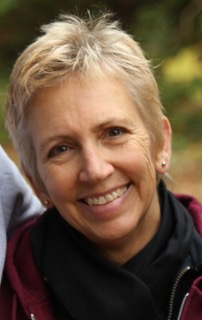
Laura is a registered nurse, photographer and paddler living with her husband in the San Francisco Bay Area. Many of her flash fiction stories are taken from her poignant experiences as a nurse and from the frequent misadventures of raising her four sons. She is currently working on her memoir in hopes of sharing her life’s journey with her boys and granddaughter.


 Open Your Art Writing Retreats