“Sometimes what you think is an end is only a beginning. And that wouldn’t do at all.”
― Agatha Christie
“Since when,” he asked,
“Are the first line and last line of any poem
Where the poem begins and ends?”
― Seamus Heaney
I’ve always been fascinated by stories told backwards, and I just discovered that there is an actual term for it: reverse chronology. #thingsIlearnedinquarantine
So…let’s fast forward to the end.
Your prompt:
Tell a story that begins at the end and works its way backwards.
From Wikipedia: “The uncanny is the psychological experience of something as strangely familiar, rather than simply mysterious. It may describe incidents where a familiar thing or event is encountered in an unsettling, eerie, or taboo context.”
As to the use of the uncanny in fiction:
“There’s a power and weight to this type of fiction, which fascinates by presenting a dark mystery beyond our ken and engaging the subconscious. Just as in real life, things don’t always quite add up, the narrative isn’t quite what we expected, and in that space we discover some of the most powerful evocations of what it means to be human or inhuman.” ~Jeff VanderMeer, “The Uncanny Power of Weird Fiction,” The Atlantic
“The uncanny freaks the reader out because it isn’t quite right – it taps into our understanding of the world and patterns around us and renders them slightly ‘off’.” ~Robert Wood, in this great article.
Read “Day of the Builders” by Kristine Ong Muslim in Weird Fiction Review, which opens eerily like this:
“This happened long before the initial signs of sickness from the outsiders rippled across my village. You should understand by now how my people were easy prey because most of us were trusting, greedy for finery, and readily distracted by new things or any semblance of finesse.”
I’m struck by the world-building of this story, how familiar it feels, while at the same time so uncannily “off” in every way.
So much of our world, our once familiar landscape, our interactions, have taken on an uncanny quality during this pandemic: The eerily deserted streets of the big cities, for example. People wear protective masks in the supermarket. A man pours wine out his apartment window into the glass of a woman leaning out her window on the floor below. Goats roam free in villages. We can draw on these uncanny images, this unsettled feeling, in our writing.
Today, I’d like you to face the strange in your flash fiction. Explore something that is oddly and unsettlingly familiar. What happens when a normally benign event takes an eerie or inappropriate turn, for example? Challenge yourself to take a subtle approach with this.
Consider how Hitchcock uses the uncanny in his films, for example, the “uncanny double” of Marion and Norman in the film, Psycho:
If you need a nudge, try using these below (from Psycho) to get you started:
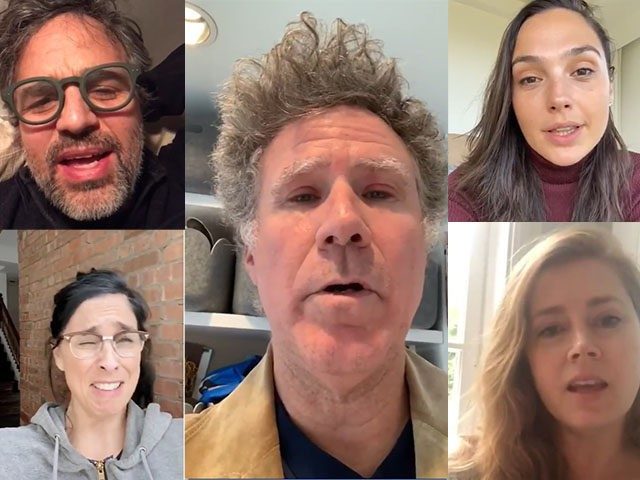
I’ve been finding it interesting how, in this streaming, online version of our lives, celebrities seem less exalted, more normal, also wearing their sweatpants, also struggling, also hoping. Also reaching out. The dividing line between the stage and the audience seems to have been breached, and maybe that’s a good thing.
This is a prompt I used in one of my Fast Flash Reunion Extravaganzas (this summer will be my 5th anniversary of teaching Fast Flash!).
Songs are hugely evocative. You know those songs you hear the first few notes of and are instantly and vividly transported to another time in your life? Here, I want you to find 3 songs from 3 different decades of your life. If you’re still in your twenties, get out of here! No, I’m kidding. If you’re still in your twenties just find three songs that were recorded during your lifetime.
I want you to write a one paragraph flash for each song. The songs may serve as the titles for each one paragraph flash, they may be mentioned within your one paragraph flashes, or they may just serve as inspirations for your one paragraph flashes.
Go HERE to find what was the #1 song on the day you were born (Mine was “It’s Now or Never” by Elvis Presley).
The result should be a trio of microfictions that feel somehow connected. If you want to give the trio an overarching title, go ahead.
Also, you may approach this as fiction or memoir or some hazy blend of both. Try to write these very tightly, for a total of fewer than 500 words if possible.
“For a seed to achieve its greatest expression, it must come completely undone. The shell cracks, its insides come out and everything changes. To someone who doesn’t understand growth, it would look like complete destruction.”
~Cynthia Occelli
I love this quote. And, in the midst of everything happening, we might be forgetting that it is spring! Even if we are still in a strange spring hibernation, our bodies and mother nature is turning on the spring switch. And growth–whether it’s the seed or our own internal growth–is usually messy.
Another spring story I find fascinating is the one about classical composer Igor Fyodorovich Stravinksy, whose Rite of Spring ballet/orchestral piece, which takes us through the eruption of spring (and which you may recognize pieces of), prompted riots–actual riots!–when it premiered in Paris in 1913–and Stravinsky was actually run out of town! The audience was completely unprepared for the primal drums and the slicing of violins–even though that is what is happening right now under the ground…
Your prompt today is a musical prompt:
Listen to The Rite of Spring (about 35 mins–I mean, what else do you have to do today?? Ha.)
Then write.
PS: If you aren’t used to listening to classical music, I suggest not watching the video–just listen and allow the waves of sound to move your emotions in that mysterious and wordless way that only instrumental music can.