Let’s feel the power today, friends! I don’t know about you, but I could use a Super Hero right now. To that end, I want you to consider… this sheep:
“This sheep escaped a farm and spent 6 years in the mountains, during which time he grew 60 pounds of wool. Wolves tried to eat him, but their teeth could not penetrate the floof. You don’t have to turn hard to survive the wolves, just be really, really soft and fluffy.”
Your prompt for today:
Create a character who has an UNEXPECTED skill/quality/feature that makes him or her or it INVINCIBLE. Your flash can be funny or absurd or terrifying or dramatic, but create a sort of Unexpected Super Hero and set up some obstacles for them. Let them slay dragons (or pandemics). Pit them up against adversity and let them show us what they’re made of (even if it’s floof)!
Bonus points if your Super Hero is an animal because animals rock!Go forth and write!
Choreographer Twyla Tharp in her book, The Creative Habit, encourages creatives to keep a journal of the things we see (hear, taste, smell, etc.), especially when they are juxtaposed in interesting ways that draw our attention, be they intentional or accidental.
It’s tremendously useful to keep a journal of the things that particularly draw your attention in your daily life. Maybe the idea of writing lots and lots of pages of your inner workings every day doesn’t appeal. But you can jot things down. And when you’re stuck, go back and look at them again. I have these odd notes on my phone: snippets of overheard conversation, a phrase from a song, peculiarities of the natural world (or of my neighbors down the street). Lots and lots of photos. Collect images and ideas you’re attracted to. Put them in your phone or folder or spiral notebook, whatever. Just don’t rely on memory!
Doing this, coupled with some daily “down time” (even if only for 15 minutes) will work magic on your creativity.
It’s about openness and receptivity to, well, a sort of creative alchemy.
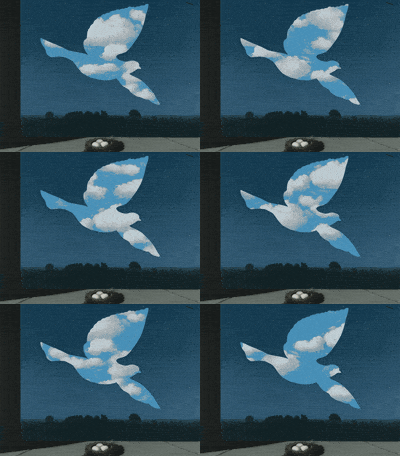
Via: Giphy Flying Rene Magritte GIF by Feliks Tomasz Konczakowski
Juxtaposition is defined as: “the act or an instance of placing two or more things side by side often to compare or contrast or to create an interesting effect.” (Merriam-Webster)
Poets are great at juxtaposition. Haiku writers and mosaicists specialize in it. They jam two or more very different ideas or images together to create new meaning and associations. It’s why we so often get an “ah ha!” experience from reading poetry. Filmmakers and photographers and visual artists of all stripes also make powerful use of juxtaposition.
But flash writers can (and should) make this a part of their toolbox as well.
In Joy Williams’ collection Ninety-Nine Stories of God, (a book I highly recommend), there’s a flash called “Veracity” that manages, in a scant couple of hundred words, a brilliant juxtaposition of church pews, a birthday bounce house, a dog, and a ’64 Airstream Globetrotter. And every single one of these elements feels necessary and significant.
My flash, “Foundling” (below) uses a similar jamming together of elements in a very short space:
Foundling
They discovered the baby in the grass, under the snapping cotton sheets. The clothesline spun and creaked, throwing light, then shadow, on his face, his wee head smooth and curved as a doorknob. The woman didn’t bend, only drew her hair from her eyes. He smells like Malt-o-Meal, the little girl said, hoisting him. Support his neck, the woman told her. It’ll snap like a pencil. Christmas Eve, her husband had packed and left for Cincinnati. Now, as raindrops dotted their arms, and the woman’s skirt flicked her calves, he came rushing through the gate, holding a newspaper over his head, calling Margaret! Margaret!
The exercise below will have you bumping together disparate objects / images / ideas in micro form to see where it takes you, what surprises you, what you unearth. You may discover new meaning is created when juxtaposing two disparate objects, ideas, or images. Forcing yourself to do this in a very small space actually serves to ramp up the power of juxtaposition. Very little room is left to “explain” yourself. You must allow what your unconscious delivers to you. The results are often delightful or disturbing, but always surprising.
Microfiction is variously defined by different word limits. For our purposes, let’s say 150 words or fewer. Microfiction often resembles prose poetry. The line between flash and prose poetry is wafer thin at times. But please set aside any need to categorize your work at this juncture. Allow whatever emerges.
So! Your prompt:
I want you to combine two or more disparate elements as compactly as you can, bump them up against each other, in as tiny a story as possible.
Don’t worry in this first draft about “making sense”…your unconscious has a tendency to make its own kind of beauty and sense. It’s what we are wired to do, after all. Find the patterns. And if we can’t find them, we create them.
Choose ONE from List A and ONE from List B and get to work!
Try to keep to just 150 words or fewer if you can.
List A
tangerine
ghost
disco ball
Isaac Newton
surgeon
List B
Saturn
Marilyn Monroe
fortune teller
continental drift
funnel cloud
This prompt will be easier if you allow whatever delightful or disturbing weirdness ensues and resist the urge to explain it. Enjoy!
Nancy and I are so happy that writer Myna Chang is signed up to participate in our return retreat at Shadowcliff Lodge in Grand Lake, Colorado this summer. Myna generously agreed to chat with me about her background, the writing life, and more.
Hi Myna! What does the “west” evoke for you? The mountains? Colorado? As a writer and person…(weird question, I know!)
I grew up in a windy, barren farm town in Oklahoma. My childhood memories revolve around wiping grit out of my eyes and finding places to hide from the scorching sun. But every summer, my grandparents would take me to an oasis in the Colorado mountains. It was an old cabin hidden in a lush green valley. The river forked just above our land, so I had my choice of two trickling streams to play in. I thought it was the greatest place on the planet, and I was heartbroken when my grandparents sold it. In my mind, “going to Colorado” means returning to that perfect setting.
Oh what a lovely memory! I’m so glad you’re getting the chance to return to Colorado! What are you most looking forward to in our upcoming retreat?
I’ve never been to a retreat. I can’t wait. I crave quiet, and time to focus on writing, without distractions or guilt. Sharing that space with other dedicated writers and workshop leaders will be like frosting on the cake — and I love frosted cake.
What sparks your creativity?
I have no idea what sparks my creativity, but I know what kills it: interruptions:
“Mom, I’m hungry.”
“Honey, where did I leave the screwdriver?”
“Bark, bark bark!”
I wouldn’t trade my family for anything, but sometimes I wish they could be quiet for an hour or two.
Ha, yes, I can relate to that! Anything strange, funny, weird, fascinating about you that you care to share?
I have weird dreams. My sleep cycle never returned to normal after pregnancy, so now when I wake up, I remember every bizarre detail. Sometimes sentient Cheetos come to visit, or brilliant mice sculpt tiny Greek-style temples in my desk drawer. I often water-ski through the neighborhood with my friend T-Rex, and occasionally we drink lemonade with our zombie buddies on the corner. I realize I probably shouldn’t admit this in public.
I love these dreams! I’m actually fascinated with dreams and think they make great fodder for writing. Thanks so much for taking the time, Myna. We’re excited to work (and play) with you in Grand Lake this summer!
Myna Chang writes flash and short stories. Her work has been featured in Writers Resist, Reflex Fiction, and Daily Science Fiction, and is forthcoming in the Grace & Gravity anthology Furious Gravity IX. She lives in Maryland with her family. Read more at MynaChang.com or @MynaChang.
Nancy and I are so happy that Linda Hahn will be joining us in Yviers, France this summer for our French Connection Retreat(which sold out in three days!). Linda kindly agreed to let me ask her a few questions. She’s had a fascinating life!
Hi Linda! Would you describe yourself as a traveler and/or adventurous by nature? And have you been to France before?
I am not much of an international traveler: Mexico, Canada and Puerto Rico so far. The trip to France will be my first to the continent. However, I have lived in various locations in the US. I grew up in Michigan in the Detroit area. In my early twenties, I traveled to Oregon and lived there for over 20 years, graduating from college with a bachelor’s and a master’s.
For about two years, I lived in Ketchikan, Alaska, the state’s third largest city on an island with 21 miles of paved road, complemented by 180 inches of precipitation per year. Playgrounds outdoors had roofs. Lots of bars and lots of churches. One movie theater, and if there were three people in line, residents thought the line was too long. No kidding. The scenery was outstanding-never saw more eagles just cruising the skies. I highly recommend traveling through the inside passage from Seattle to Juneau by ferry. You can sleep on cots on the deck under sunlamps and play cards all night. In Ketchikan, I taught swimming in elementary schools and met a lot of nice people, but two years was enough and moved back to Oregon.
After completing my master’s degree in History of Science, I worked as a Public Historian in Washington, D.C. for about three years. I had previously been living in rural Oregon, and the culture change between Oregon and D.C. was significant. Too many people, way too much traffic. I was there during 9/11 and saw the smoke from the Pentagon burning from my apartment window. A couple of years later, during the sniper attacks actually, I moved back to Michigan. Phew.
What are you most looking forward to at the French Connection retreat?
The presentations on flash fiction intrigue me. I am not very familiar with the style so I am curious. On a practical note, even if I do not become a flash fiction writer, I suspect that the editing skills needed to pare down narrative into a very concise package will be beneficial in writing either short stories, or novels. I am also thinking that Nancy’s presentation on putting a novel together from flash fiction pieces will be helpful in putting together any novel-length piece. While these presentations sound great, honestly, I look forward most to being with people who take the craft of writing seriously and are on a journey of exploration like myself.
Your favorite book?
Where the Crawdads Sing by Delia Owens is an all time favorite. Since reading Crawdads, I compare other novels to it and few measure up. Most compelling in Crawdads was the way I immediately felt a connection with the main character, a sense of empathy. Prior to reading that book last year, my fave was Name of the Rose by Umberto Eco. Another favorite author is Dan Brown. I have read DaVinci Code and Angels and Demons and am currently reading Origins. I came back to reading Brown because I recently signed up for Masterclasses online and first listened to his presentation. It was so wonderful to hear Dan Brown say that when he first started writing fiction, he didn’t think he could actually complete a novel. Dan Brown. Wow. I used two points he made in a short story of mine.
And….Stranger things? Something about yourself you’d like to share?
A year and a half ago I retired from a career in prospect research/fundraising. I moved from the Metro Detroit area to the Village of Port Sanilac in the Thumb of the state, population of 600, where I live four blocks from the shores of Lake Huron (pictured on the right). In this new, quiet and remote environment, I will make writing my new fun profession. I took creative writing classes in college but let it go. Actually, I had to let it go because when I sit down and really write, it is all-consuming. My imagination goes wild and I act like a crazy person, staring at the screen, debating a paragraph and ooops, hours have passed, papers would be due and I’d be late for work. I didn’t really pick it up again until I retired, but I still have the same obsessions. I’ll work on a project totally focused for two weeks, and then not write for another two weeks. So now, I am truly enjoying being obsessive but in all honesty, I suspect these are not the best habits and I am hoping someone will magically set me on the right path.
Thanks so much, Linda! Can’t wait to hang out with you in France this summer!
Our French Connection Retreat is currently filled, but let us know if you’d like to get on the wait list. Better yet, check out our August retreat in Grand Lake, Colorado, now open for registrations!
The quote, attributed to many, and paraphrased by Ann Richards, goes: “After all, Ginger Rogers did everything that Fred Astaire did. She just did it backwards and in high heels.”
So imagine this for flash fiction writers. We must do everything that longer form writers must do, only in a much tighter space. We are constrained by brevity.
Perhaps “constrained” is not the right word though. From a different perspective, perhaps the word limit is actually—liberating.
Hear me out.
With so few words at its disposal, flash fiction lends itself beautifully to innovation and experimentation. All those extra words we must do without force flash writers to find other ways to create a fully realized story, complete with emotion, movement, and resonance. The “constraints” imposed necessitate boldness, risk-taking, and originality.
But first let’s right dispense with the notion that since it’s so short, flash writing is easy. It is not. Nothing worthwhile is.
If you’re new to the form or struggling with it, here are a few things you might think about and try:
See what happens when you eliminate transitions and bridges from paragraph to paragraph. The result is a segmented or mosaic structure. Here, in a series of connected or very loosely connected very short pieces, the writer creates meaning in the jump cuts and the white spaces. In a sense, encouraging the reader to collaborate. (See my segmented flash, “A Room with Many Small Beds” published in Threadcount Magazine.)
When you take disparate elements and bump them up against each other, you create new meaning. Poets do this all the time. Which takes me to my next tip.
Read poetry. Read lots and lots of poetry.
See what happens when you simply keep the pen moving. When you allow a story to spill out in one long exhale, not allowing yourself to editorialize or explain. Maybe you have a very emotional story you want to tell, but you keep stopping yourself, and the only way out is through. Maybe, for this particular story, you want to be all up in the reader’s face. Try writing what I call the “breathless one paragraph flash.” Read “Friday Night” by Gwen E. Kirby published in Wigleaf, a story that manages to be both funny and deeply moving.
OR cast aside all “rules” and borrow a completely different form to tell your story. See this innovative stunner, “Vagabond Mannequin” by K.B. Carle published in Jellyfish Review (and drafted in my Fast Flash workshop).
It’s all about getting the words down. You can futz with it all later, but the best way to get better at this challenging form (to be a Ginger Rogers of the literary world) is to simply write it. Lots of it. Play. Experiment. Invent. Take the form and run with it. Make it your own. And read, read, read.
*(Note: This piece was written for Mslexia Magazine’s newsletter in advance of their 2019 Flash Fiction contest, which I am judging) There’s still time to enter! The deadline is Sept. 30th. Go herefor more details.)


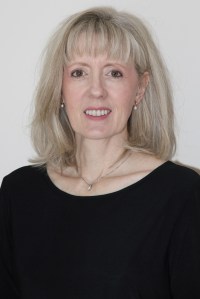 Hi Myna! What does the “west” evoke for you? The mountains? Colorado? As a writer and person…(weird question, I know!)
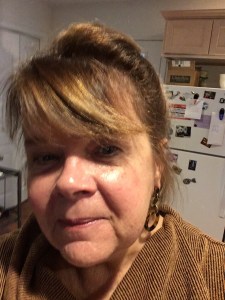 Hi Linda! Would you describe yourself as a traveler and/or adventurous by nature? And have you been to France before?
 The quote, attributed to many, and paraphrased by Ann Richards, goes: “After all, Ginger Rogers did everything that Fred Astaire did. She just did it backwards and in high heels.”
 Open Your Art Writing Retreats